 山月行
山月行Stringify: Node 服务端序列化及反序列化优化
发布于更新于
https://github.com/fastify/fastify/blob/main/docs/Validation-and-Serialization.md fast-json-stringify https://npm.devtool.tech/json-stringify-safe
序列化
const user = {
  id: 10086,
  name: "shanyue",
  location: "山西省临汾市洪洞县",
  isOnline: false,
};
在服务端向客户端发送数据时,需要把梳理好的 Object 序列化为可在 http 中传输的数据,如文本数据。因此,在服务端的末尾一般是进行序列化。
在 Node 中借用 JSON.stringify 进行数据模型的序列化操作。
const server = http.createServer((req, res) => {
  res.setHeader("Content-Type", "application/json; charset=utf-8");

  const data = JSON.stringify(user);
  res.end(data);
});
环形嵌套与序列化
const user = { id: 10086, name: '山月' }
const user._user = user

JSON.stringify(user)
在服务端进行数据处理时,如果不小心混入了环形嵌套数据,则会构成序列化失败,造成意外情况,发生异常。
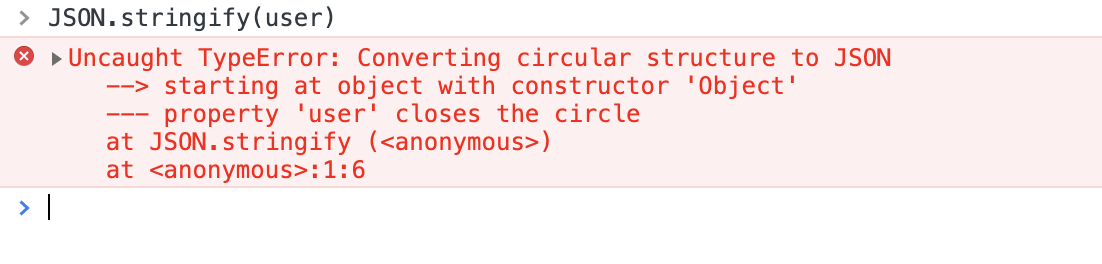
在实际生产环境中发生这种问题的概率极小,因为对于数据库中 ORM 而言,他们有专门的 toJSON() 进行序列化处理。
即使出现嵌套数据,嵌套数据也会通过 defineProperty 定义 enumerable: false 使它不可枚举,而 JSON.stringify 会跳过不可枚举数据进行序列化。
更快的序列化
如果对一个对象进行序列化,那么它的时间复杂多是多少呢?
const stringify = user => {
  return `{
    "id": ${user.id},
    "name": "${user.name}",
    "location": "${user.location}",
    "isOnline": ${user.isOnline}
  }`;
};

stringify(user);- fast-json-stringify: 2x faster than JSON.stringify()
JSON Schema 是基于 JSON 的 Schema,对 JSON 进行数据规范化及校验,并附有一份规范 json-schema.org。
{
  "title": "User",
  "description": "用户信息",
  "type": "object",
  "properties": {
    "id": {
      "description": "用户 ID",
      "type": "integer"
    },
    "name": {
      "description": "用户姓名",
      "type": "string",
      "maxLength": 20
    },
    "location": {
      "description": "用户地址",
      "type": "string",
      "maxLength": 30
    },
    "isOnline": {
      "description": "用户是否在线",
      "type": "boolean"
    }
  },
  "required": ["id", "name"]
}
const stringify = (user) {
return `{
"id": ${verifyInteger(user.id)},
"name": "${verifyString(user.name)}",
"location": "${verifyString(user.location)}",
"isOnline": ${verifyBool(user.isOnline)}
}`
}再快一点的序列化
源码就不解析了